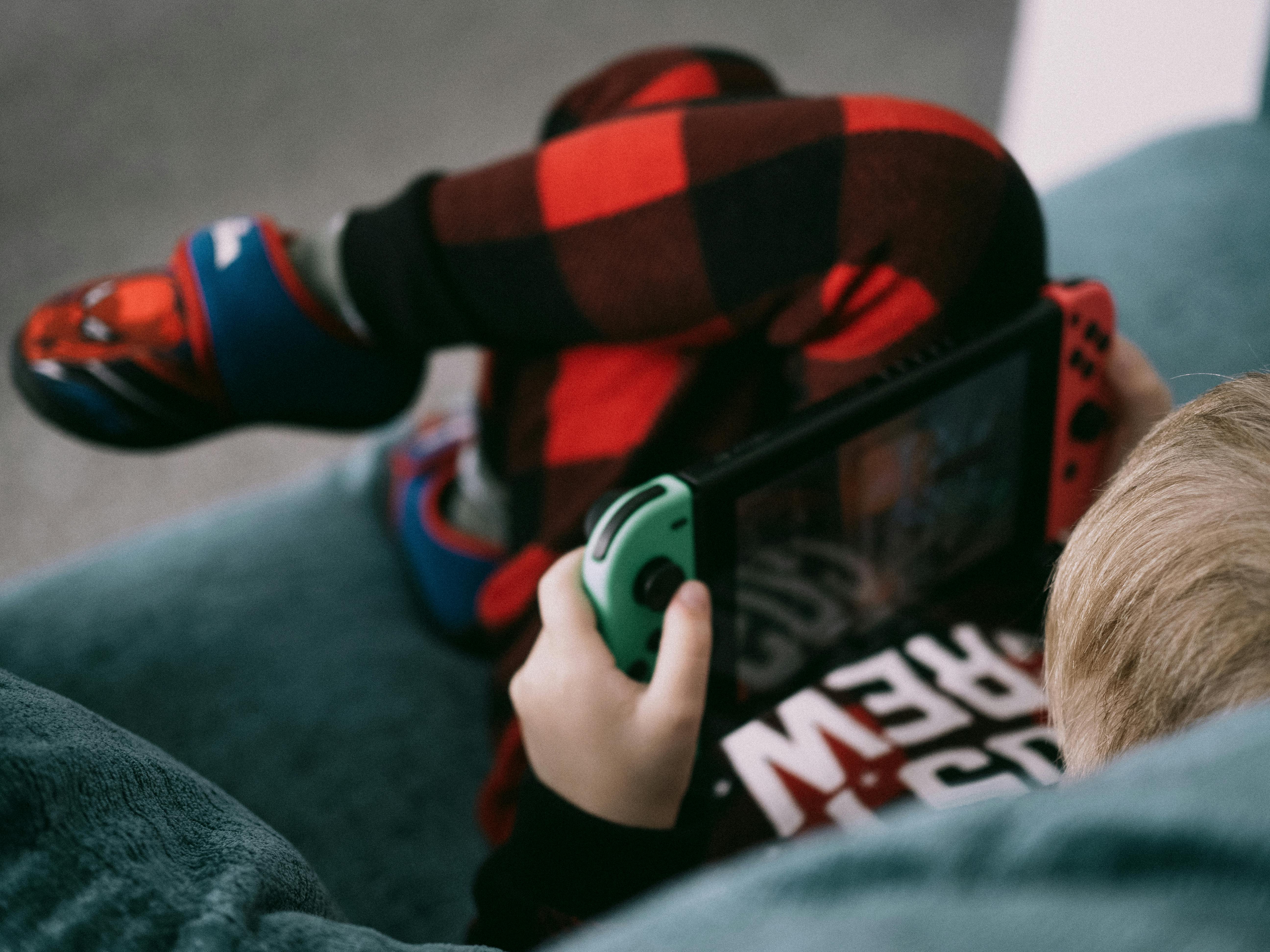
Article: What an Art Teacher Taught Me About Confidence and Creativity in Kids
What an Art Teacher Taught Me About Confidence and Creativity in Kids
Do you remember art class growing up? It’s probably not surprising that it was my favorite class from elementary through high school. I sat down with Mrs. Bethany Hill, art teacher for kindergarten through seventh grade, to get her perspective on how art affects kids.

How Kids Can Improve Art Skills Through Practice, Not Talent
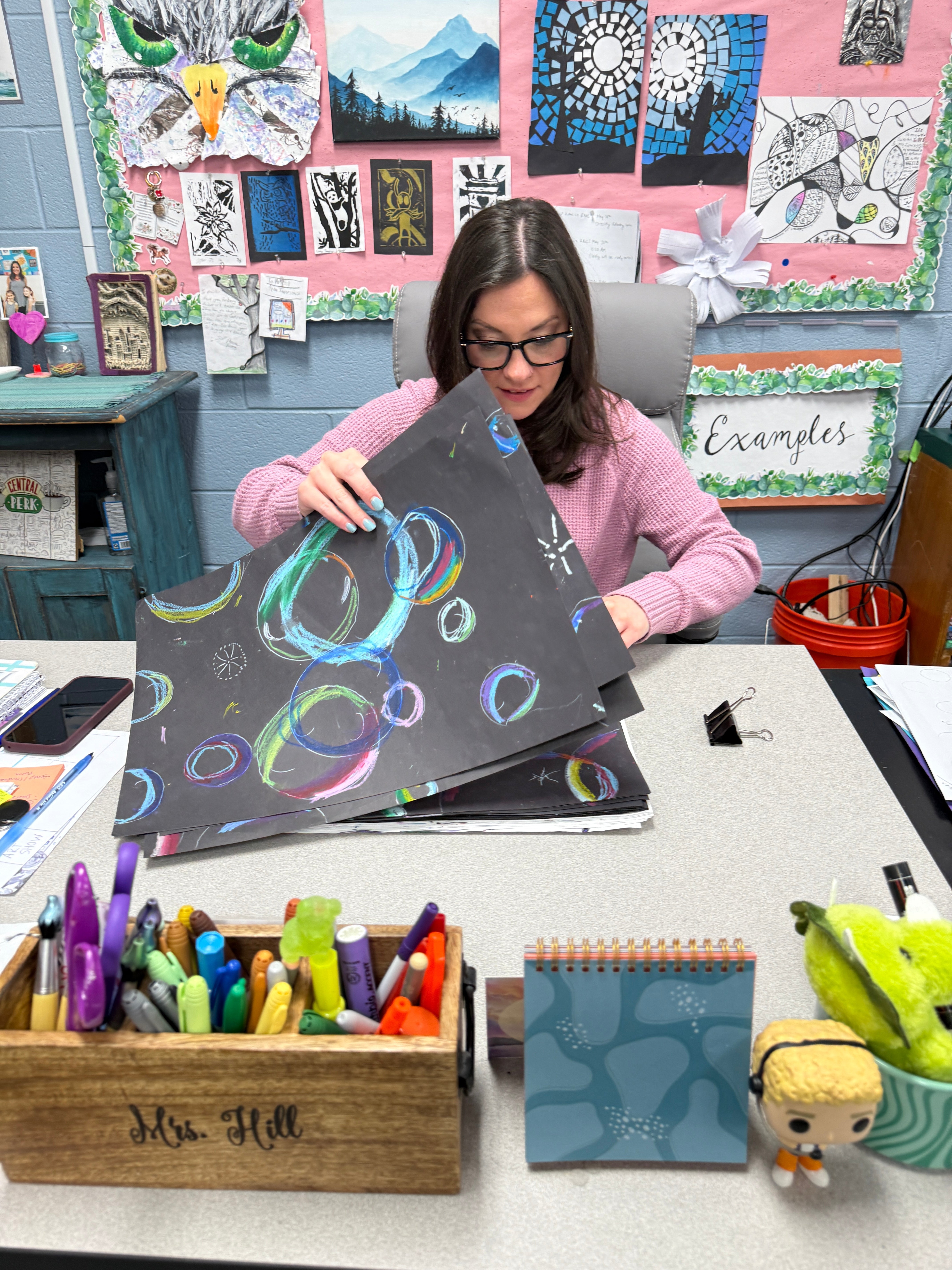
Mrs. Hill sits behind her desk, her classroom walls covered in art projects from her students.
Miss Hairbrush: “All right, we'll just get into it,” I say. “Thank you so much for doing this! How do you see young children in your class approach art, if they're not naturally gifted, or maybe they are, but struggling with wanting things to look one way, but they don’t? How do you deal with that as an art teacher?
Mrs. Hill: “Something that I like to try to train them to think about is that we practice everything that we grow in,” says Mrs. Hill. “So, practicing how to spell, practicing how to shoot baskets, practicing how to do math, practicing how to read, are not different than practicing art. And I try to get them out of the mentality that I’m either good at art or bad at art. It's not that simple! Anything that you want to get good at you can get good at through practicing and focusing. And yes, some people are naturally more talented than others, but we all have the ability to practice something and achieve something and grow.”
Learn how to turn screen-time into creative time
The Benefits of Art for Students: Creativity, Emotional Growth, and Self-Expression
Miss Hairbrush: “Is art, at home, or in school, important? What does it do for the students?”
Mrs. Hill: “Art is such an important thing! It's an outlet for so many emotions as kids are growing. The beauty that I have as an art teacher is that I get to watch a child that I had in kindergarten become a seventh grader. And I see them developing over time, and who they are is changing, growing. And so the different life experiences that affect you when you're a young kid, when you're in upper elementary and when you're in middle school, I get to see firsthand in my classroom. I teach that art is something they can lean on, to be an emotional outlet, to be a place of rest for them, for the other stresses that they might have in life,” she says. “I think that art is really important for students to use a different part of their brain than what they're using in other classes academically. Just like exercise and gym class are so important, creativity is important too. It taps into other areas as well. Practicing creative things in an art room sets a foundation for kids in thinking outside of the box and also with your identity and being comfortable with your self-expression and problem-solving skills.”
How One Reluctant Student Found Confidence Through Art
I question Mrs. Hill about this some more. I’m really interested in what her years of experience say.
Miss Hairbrush: “And do you see that? Do you see that transfer to other areas of their life? Do you feel that learning to draw or paint or sculpt translates to skills outside of the arts?”
Mrs. Hill: “Absolutely!” she says. “Let me give you an example. I had a young man who really struggled in art, and he was one of those personality types that’s just going to check out, waste time, slop it together to be done early. He's not really putting in his best effort, because it challenges him. But what was so beautiful is that outside of class, he was put in a group project, and he had two of my best artists in that group with him. They all came to show me this huge poster that they made of a landscape with a cave, and they organized all these cool sections of the cave, and he took ownership of that. He was proud of that. And I could tell that he didn't just let them do the work. That sense of community building, that sense of bonding with his peers who were passionate about this sparked a passion in him. After that, I saw him grow in my class. I saw what he was able to do independently, because of what he was able to do with group support.”
How Creativity Helps Kids Process Stress and Emotions
Miss Hairbrush: “That's so good. I love that story! Can you talk a little bit more about how learning or creating art is good for the soul, and releasing some of that anxiety? Do you see that happening in real life with all these children that you see every day?”
Mrs. Hill: “That's probably my favorite topic of all time! I had a student named Callie from fifth to eighth grade. She a freshman now. Her mom messaged me over Thanksgiving that Callie wanted some printmaking materials for Christmas and could I point her in the right direction. I felt so excited to share this with her mom because Callie actually won a Silver Key in the Scholastic Art Awards for her very first linocut design in 7th grade, which is a huge accomplishment! I watched her fall in love with this medium and I know it is not something parents can easily access like paint."
"I could tell over the years that Callie found art in general, but this medium in particular, to be a soothing activity for her. She would get in the zone of complete focus during class, blocking out any nonsense around her from peers. I appreciate that her parents are fostering this gift at home! Her mom has told me a couple of times that her ability to create art has amazed her. She had no idea that she had those gifts inside her until Callie was in my class in 5th grade."
“And please know that’s not a pat on the back for me!” Mrs. Hill adds. "God gave her that talent and I am so privileged that I got to share my resources and passion for creativity in such a way that 'brought it out of her' as her mom has told me. It's a very dear relationship and she has gifted me with exquisite prints made at home since then that I will treasure forever!"
"On that emotional outlet note, I'm also glad that she can get in her zone after a hard day of testing and just do some creative things at home. I think that does so much for students and for us as individuals. When you create, you're able to kind of shut the door on the rest of the world. You can shut out the distractions that are happening in your email or your homework, or whatever social issues are going on among friends or family, and it's a moment of just you and God. You’re using your gifts to glorify God, and the simple act of creating glorifies Him.”
Balancing Technology and Creativity: Helping Kids Build Focus
Miss Hairbrush: “I remember when Paint Brush came out on the computer, and I would just spend hours playing that. But as the digital world becomes more and more important and these young kids have so many games and programs at their fingertips, do you see that affecting the kids in your class? What are some things that parents can do to encourage creativity at home?”
Mrs. Hill: “I've been a teacher for 12 years now, and my first years teaching were very different in terms of student satisfaction and focus. I think technology is a big reason why. It trains them to have immediate gratification. And there are a lot of studies done about how scrolling on our phones or looking online affects our brains and changes the way our brains even receive information. That immediate gratification that everyone has access to now because of technology at our fingertips, works against that perseverance factor. If something doesn't come easily right away, I don't want to have to work for it. I want immediate gratification. And it's subconscious. I see that there's been an increase in that struggle, and I believe strongly that technology has a lot to do with it.”
“On the flip side, I also see how technology can be used as a tool. I have another little anecdote on this. There is a young man in second grade who struggled with his art. He would rush through and say, “Mrs. Hill, I'm done.” And I would say, “Okay, this is a great start. Let's finish coloring this area a little bit neater.” He just wanted to be done. There was a complacent attitude with him, and so he didn't typically get A's on his projects because he didn't want to put in effort. He was a second grader, very young, you know. He came back in third grade with all these art skills that made me say, “Whoa, what were you doing all summer?!” He said, “Well, my sister showed me these YouTube videos, and we practiced drawing all summer!” I thought it was so neat because the YouTube tutorials, and I know that you have these, many of them are wonderful. I love that you've included that in your book, and that you have the QR codes so that people can watch and follow along while they do it - that is fantastic. Children really crave guidance. I even tell adults this, figuring out how to start is truly the hardest step!”


Mrs. Hill’s joy for art is evident. And her enthusiasm encourages me that kids are still benefiting from creativity in the classroom and out. Practice does make a difference in art, not just talent! And even though screens are a larger part of their world, kids are using it to learn to draw. That’s the whole point of my COLORSKILLS books! Guidance helps them get started, stay focused, and gain confidence.
Thank you, Mrs. Hill!